- Owned and Operated
- Posts
- Billboards Alone Are Not a Growth Strategy


Billboards look big. Most small shops lose money on them.
Below, I break down where billboards actually fit in a service business marketing strategy, why smaller shops often jump in too early, and how to think about branding versus lead generation as you scale.
Check out these resources before we get started…
Your Google Business Profile is waiting to generate you more leads; unleash the power
From May 5-7, learn exactly what it takes to break through the $5M barrier
HARDI released its monthly Trends report, showing that sales by its distributor members declined by 5.9 percent year-over-year in January
Rebar lands $14M to help HVAC suppliers generate quotes faster with AI

Billboard Marketing: Yes or No?
Billboards can work, but only when they are part of a larger marketing strategy. A lot of service companies look at out-of-home advertising as a way to generate calls, but in reality it functions more as branding than direct response. It is hard to track, hard to test, and usually needs support from other channels to make a real impact.
When billboards are used well, they reinforce your name across a market (like this 👇️ ).
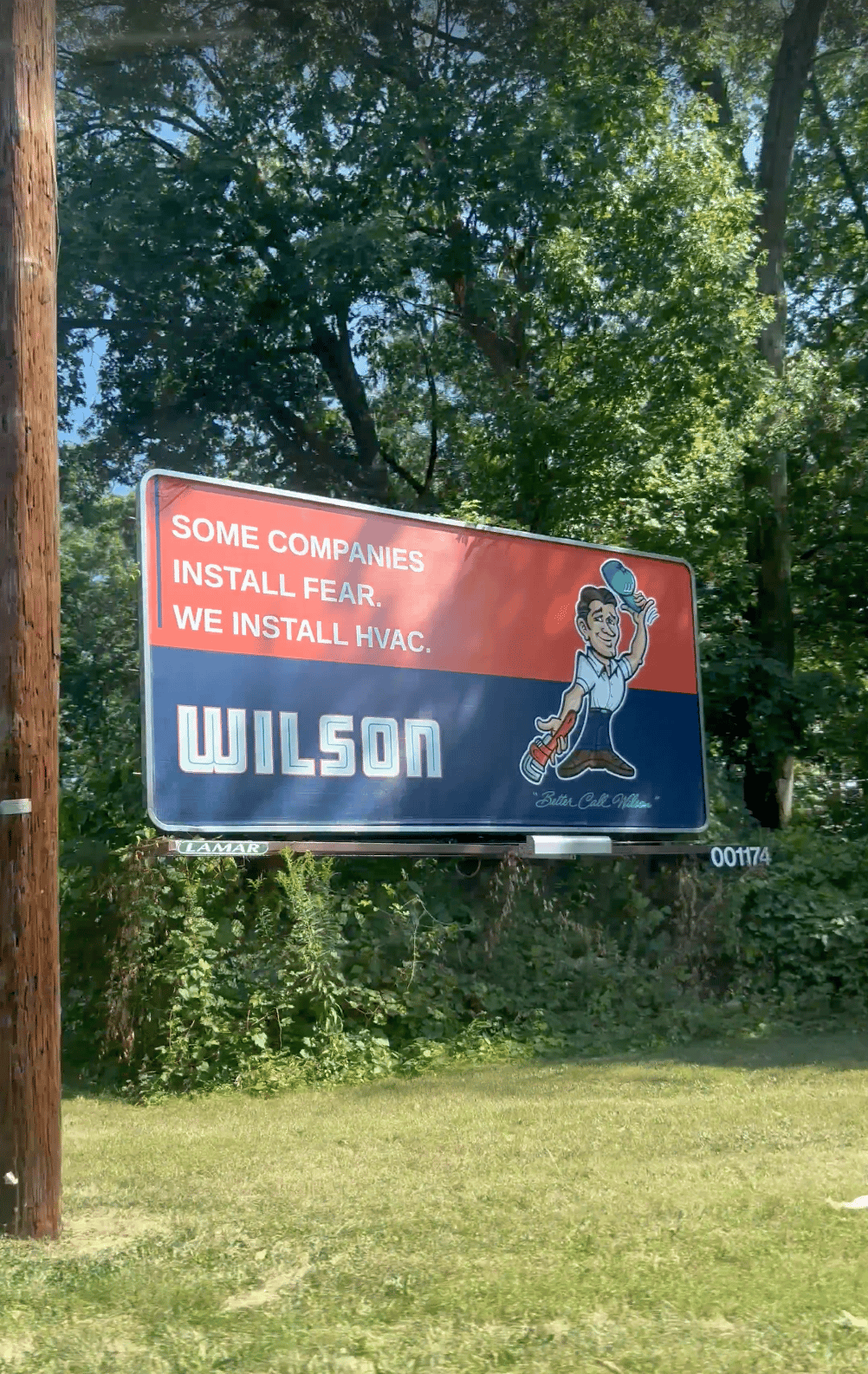
People see the sign, then see your ads online, then search your company later. That increase in branded search can make Google, LSA, and PPC perform better, even if the billboard itself never gets direct credit for the lead.
Where owners get into trouble is using billboards too early. Smaller shops will spend real money on one or two signs while they are still trying to figure out how to consistently buy leads. Without enough budget, enough repetition, or enough support from other channels, the sign becomes expensive visibility instead of real growth.
The companies that make billboards work usually do a few things the same way. They keep the message simple, tie it clearly to the brand, place multiple boards in the same area, and use them alongside other marketing.
When those pieces line up, billboards can strengthen the whole system instead of draining the budget.
Turn Your Website Into a Sales Engine
Most contractor websites are built to collect form fills, not to sell.
We’ve been working on turning our site into a real revenue channel, and that’s where Contractor Commerce steps in. It lets home service companies sell filters, maintenance plans, and even full system installs online, with instant quotes and no callback required.
That means better conversion, fewer wasted visits, and more jobs booked from the traffic you already have.
Some of the things that stand out to me:
Plugs into your existing website
Instant online quotes built for HVAC and plumbing
Built specifically for the trades, not generic ecommerce
One contractor put it this way:
Whenever I get a lead from Contractor Commerce, we celebrate because it’s so much closer to a sale than anything we get from other sources. Our ability to close those leads is much higher, and our sales reps say the same thing. They find Contractor Commerce leads far more reliable than anything else.
If your site gets traffic but doesn’t generate enough revenue, this is worth looking at.

How Billboard Marketing Actually Works
Unlike digital marketing, billboards are not built for fast testing or precise attribution. Their job is visibility. They put your brand in front of thousands of drivers every day and reinforce recognition over time.
That means success usually comes from repetition. When people see the same company name again and again, it becomes familiar. Later, when they need a plumber, HVAC company, or electrician, they are more likely to search for the brand they recognize.
There are two common billboard formats:
Static billboards: Printed boards that stay up for a set period of time, often a month.
Digital billboards: Rotating screens that cycle through multiple advertisers.
Highway placements: Built to capture high traffic and long commute visibility.
Local road placements: Often cheaper but dependent on steady daily traffic.
Creative matters, but simplicity matters more. Drivers only have a few seconds to process the message. The most effective billboards usually focus on a short phrase, a clear brand name, and a visual that sticks in someone's memory.
Placement strategy also plays a big role. One billboard in a random location rarely does much. Multiple boards placed along commuting routes or within a tight geographic area create the repetition that actually drives recognition.

What the Numbers Say About Billboards
One of the clearest patterns is that billboard marketing tends to work best at scale. Smaller companies often try one or two boards, while larger companies run dozens at the same time.
The difference in results usually comes down to budget, repetition, and how well the billboards connect to the rest of the marketing system.
A common situation looks like this. A $5 million service business spends about 10 percent of revenue on marketing, which comes out to roughly $500,000 per year. Out of that, $200,000 to $300,000 goes to billboards, or close to $20,000 per month. That sounds like a serious investment, but without enough budget behind the rest of the marketing system, the boards often fail to move the business forward.
Branding channels are also harder to measure than direct lead generation. Instead of tracking calls directly, performance often shows up in indirect signals that build over time.
Increase in branded search volume
More direct calls instead of paid leads
Higher conversion rates on Google and LSA
More people recognizing the company name
In larger companies, branded search can make up the majority of total search traffic. Instead of people typing “plumber near me,” they search the company name directly. That usually means brand exposure from sources like billboards, radio, or streaming ads is reinforcing everything else in the marketing stack.
There is also a clear revenue threshold where brand marketing starts to make more sense. For many service companies, strong brand spend does not have a meaningful impact until somewhere around $20 million in revenue. Below that level, most growth still comes from buying leads, improving conversion, and increasing review volume.
Budget mix tends to shift as companies grow.
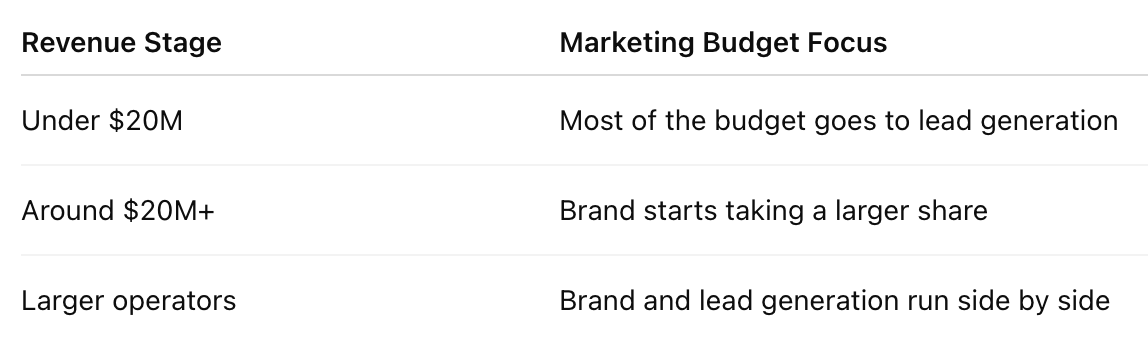
Another trend that shows up consistently is that density matters more than presence. One billboard in a random location rarely changes anything. Multiple boards placed along the same commuting routes create repetition, and repetition is what makes people remember the brand later when they need the service.
The pattern is consistent across markets.
Billboards work best when the business already has steady lead flow, enough budget to stay visible, and a marketing system that can convert the attention into real calls.

How To Use Billboards Without Wasting Money
Billboards work best when they are used with intention. Most of the mistakes happen when owners put one sign up, hope for calls, and never connect it to the rest of their marketing. If you are going to spend money on out-of-home advertising, the goal should be repetition, recognition, and support for the channels that already drive leads.
The first decision is timing. Billboards make the most sense after your lead generation is already working. If Google, LSA, and PPC are not producing consistent calls, a billboard usually will not fix that. Brand advertising multiplies demand that already exists. It does not create it from scratch.
Budget size matters more than people think. One board in one location rarely moves the needle. What works better is running multiple boards in the same area so people see your name over and over during their normal commute. When someone passes the same company five or ten times a week, the brand starts to stick.
Placement should follow traffic patterns, not ego. The best locations are the roads your customers drive every day. Commuting routes, major connectors between towns, and high-traffic corridors tend to outperform random highway placements. Visibility over time is more valuable than a single expensive location.
Message strategy should stay simple. Drivers only have a few seconds to read the board, so long explanations do not work. The most effective billboards usually have a short phrase, a clear company name, and something memorable enough that people recognize it later.
Good billboard creative usually follows a few rules:
Keep the wording short and easy to read
Make the brand name obvious
Use humor or a strong visual when it fits the brand
Avoid clutter, phone numbers, and too much detail
Tie the message directly back to the company
Consistency across marketing channels makes billboards stronger. When the same name appears on trucks, online ads, streaming ads, and billboards, the brand feels bigger than it really is. That familiarity often shows up later as branded searches, direct calls, and higher conversion rates on digital leads.
Billboards can also work in specific situations where you want to grow in one area. Running several boards in the same zip code while also advertising digitally in that same area can help increase recognition faster. The combination of online ads and physical visibility makes the market feel saturated even with a smaller budget.
There are also times when billboards are the wrong move. Smaller companies sometimes use them because they want to look bigger, not because the strategy makes sense. When the budget is limited, the money usually performs better in channels that can be tracked, tested, and scaled quickly.
The companies that get the most out of billboards treat them as part of a system. They buy enough placements to create repetition, keep the message simple, support the boards with other marketing, and give the campaign enough time to build recognition instead of expecting instant calls.

Where Billboard Marketing Goes Wrong
Most billboard campaigns fail for the same few reasons, and almost all of them come from using brand advertising at the wrong time or in the wrong way.
Using billboards too early: Smaller companies often invest in signs before they have consistent lead flow, when the money would perform better in trackable channels like Google or LSA.
Running only one billboard: A single placement rarely creates enough repetition to make people remember the brand.
Spending without a full strategy: Billboards work best when supported by other marketing like digital, streaming, radio, or TV, not as a standalone channel.
Choosing locations based on visibility instead of traffic patterns: The best boards sit on daily commuting routes, not random highways with low repeat exposure.
Trying to track billboards like direct response ads: Brand marketing often shows up as more branded searches and higher conversion rates, not as calls directly tied to the sign.
Overcomplicating the message: Long copy, phone numbers, and too much detail make the board harder to remember at driving speed.
Making the billboard about ego instead of results: Owners like seeing their name on a sign, but recognition alone does not mean the campaign is producing leads.
Control Your Fuel And Fleet Spend With One Card
If you run trucks, fuel and field spend can get out of control fast. That’s why Coast is picking up steam among serious home service business operators.
With Coast, you can set limits by vehicle, merchant, or category while earning rebates on every gallon. You get real control, cleaner books, and no junk fees, plus up to a $2,000 sign-up bonus if you try it.
*The Coast Visa® Commercial Card is issued by Celtic Bank. All card accounts subject to credit approval.

Billboards don’t create demand. They amplify demand that already exists.
If your marketing engine isn’t working yet, a billboard won’t fix it. But when it is working, billboards can make the whole system perform better.

What do you think about today's "Clicks to Calls" newsletter? |
👊 John
Disclosure: Some of the content and links in this newsletter are sponsored or affiliate links, which means we may receive payment or earn a commission if you click through or purchase. However, all opinions expressed are entirely my own.
Want More Owned and Operated?
📰 Subscribe to the JackQuisitions newsletter here
📰 Subscribe to the Entry & Exit newsletter here
🤝 Get your brand in front of 40,000+ home service business owners here
Reply